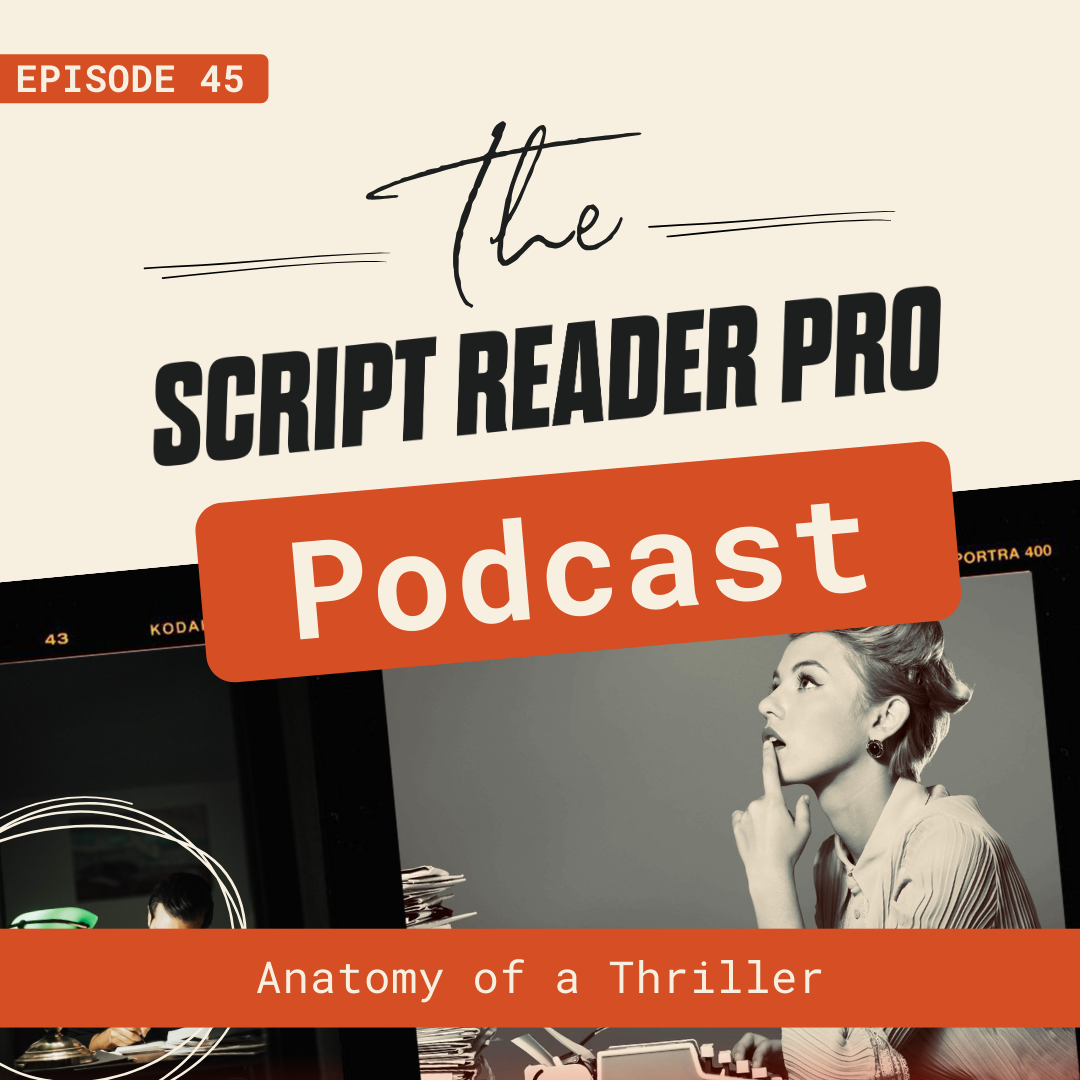
In this episode of the Script Reader Pro Podcast, Scott and Desiree break down exactly what makes a thriller work beyond just dead bodies, chase scenes, and plot twists.
Whether you’re working on a gritty crime drama, a high-stakes political thriller, or a slow-burn psychological nail-biter, this episode gives you a full walkthrough of what the genre demands, and how to deliver it without relying on cheap tricks or tired tropes.
Using examples from The Woman in Cabin 10, The Sixth Sense, Silence of the Lambs, Gone Girl, Mission: Impossible, and more, they unpack what keeps readers turning pages, and what makes a script fall flat.
Inside this episode:
- The 6 most common thriller subgenres (and how to find yours)
- Why your main character’s vulnerability is the key to suspense
- The difference between thrillers and horror, and where they overlap
- How to structure your thriller to build pressure (not just pace)
- Why stakes don’t always have to be global but they do have to feel life-or-death
- How to write twists that feel earned, not gimmicky
- The role of secrets, reversals, and red herrings (and how to use them well)
- Why writing a thriller is more about tension than action
- How to reverse-engineer your thriller without losing emotional depth
- What screenwriters can steal from true crime, novels, and Dateline
Whether you’re writing a feature, a pilot, or something in between, this episode will help you nail the rhythm of a thriller, craft emotionally engaging stakes, and keep your reader guessing (without losing the thread)