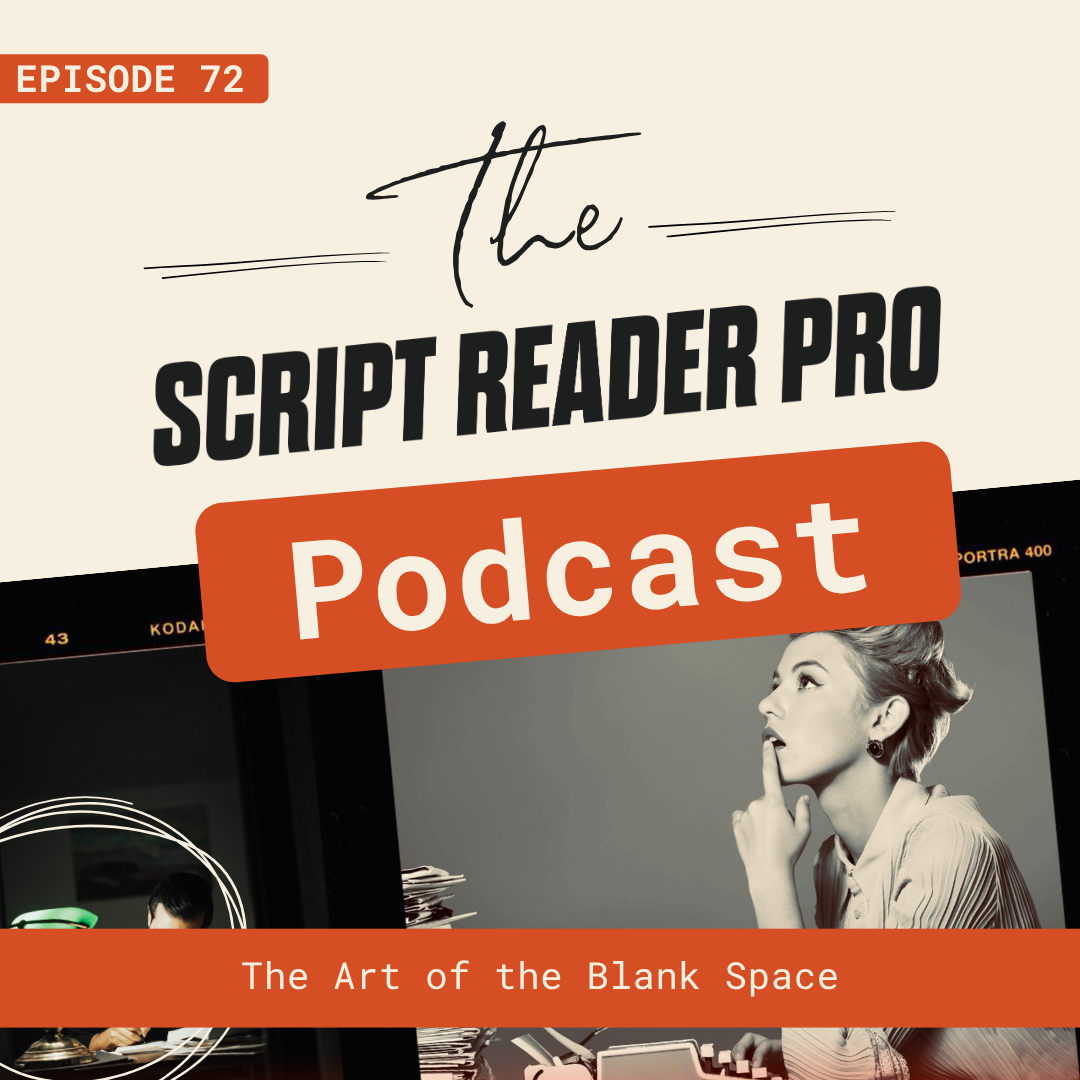
In this episode of the Script Reader Pro Podcast, Scott and Desiree dig into one of the most powerful, and most misunderstood, tools in a screenwriter's arsenal: the art of the blank space.
The idea is simple. Don't give your audience everything. Let them fill in the gaps, participate in the story, and come to their own conclusions. As Billy Wilder put it, give them two plus two, not four.
We cover:
- What "on the nose" writing really means, in dialog and visually
- Why leaving blank space makes the audience feel like active participants
- Subtext in dialog: how to use silence and implication as weapons
- Showing the aftermath instead of the event itself
- How juxtaposition creates tension when what's said and what's shown don't match
- Genre-specific examples: thriller, drama, romance, sci-fi, and comedy
- Scene breakdown: a dialogue-free excerpt demonstrating the blank space in action
- Iconic movie examples - Jaws, The Sixth Sense, Up, and Inception
- Hemingway's six-word story and what it teaches screenwriters
- Listener Q&A: writing a character's blind spot without spelling it out, second screen syndrome, AI vs. authentic voice, and what makes a truly great inciting incident
The most memorable cinematic moments live in what's left out, the scrubbed clean pan, the spinning top, the suitcase by the door. Master the blank space, and you master the audience.